
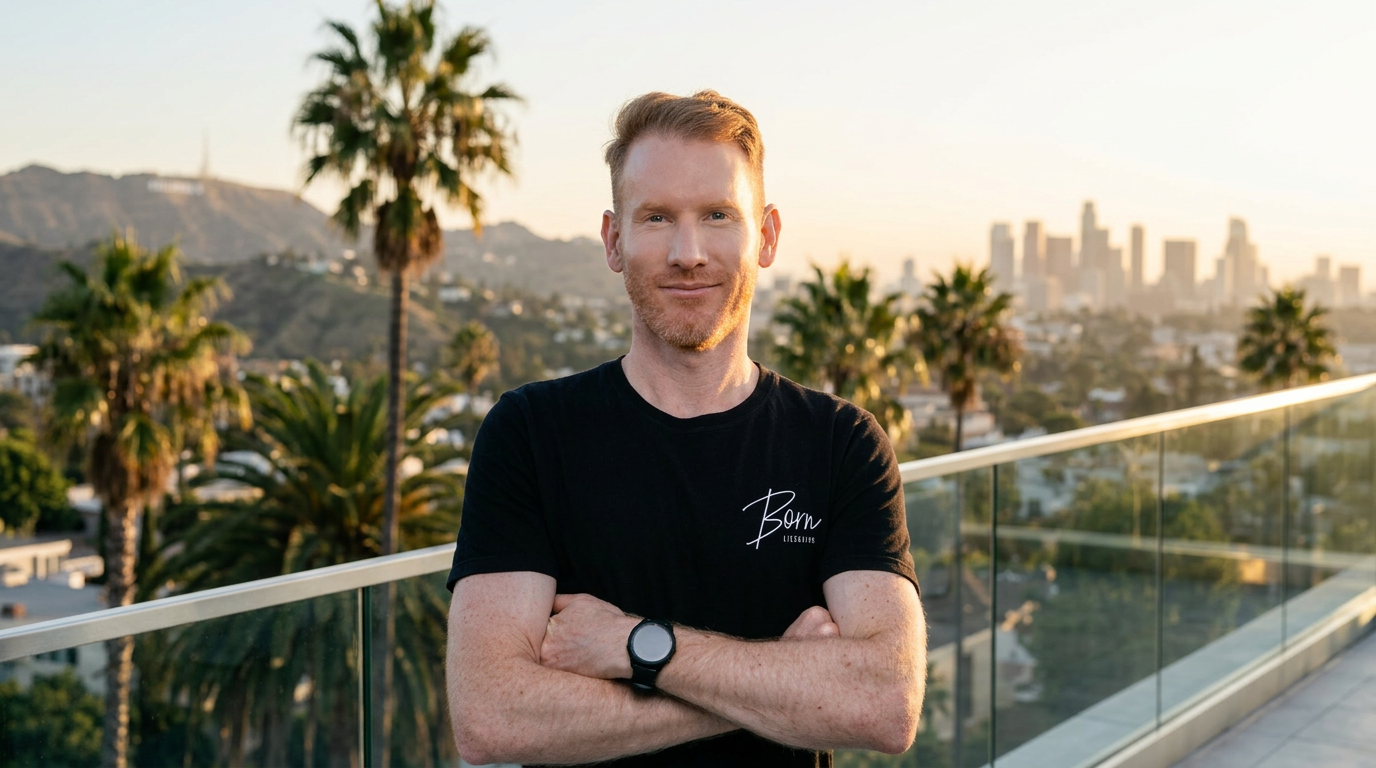
Above: David Born recently moved to LA
I've recently made the move to Los Angeles - the entertainment capital of the world, home to the studios, the franchises, and the IP portfolios that shape global popular culture. It feels like a fitting place to write this piece.
For the past twenty years I've been working in brand licensing, through Warner Bros., Cartoon Network and my business Born Licensing - connecting brands with the entertainment properties, characters, and IP they want to be associated with, and structuring the commercial agreements that make those partnerships possible. We work with Rights Holders and licensees to ensure that when a brand wants to use someone else's IP, they do it properly: with the right agreements, the right fees, and the right permissions in place.
That experience sits at the heart of Born Legal, the compliance consultancy I co-founded with my sister Emma Tiberi, an experienced advertising and marketing lawyer. Between us, we've seen both sides of the licensing equation - the deals that work, and the ones that go badly wrong when someone decides to skip the process.
This piece is written for brands, agencies, and marketers who want to understand the risks. But the licensing perspective is relevant here, because the people I've spent years doing deals with - Rights Holders, studios, brand protection teams - are exactly the people who come after advertisers who cross the line without a license.
Consider this a view from both sides of the table.
"What if we did something that felt like Rocky?"
There's a conversation that happens in creative agencies all the time. Someone in a brainstorm says, "What if we did something that felt like Rocky?" The room lights up. The client loves it. Next thing you know, there's a lone figure in a grey tracksuit, pumping their fists at the top of the Philadelphia Museum of Art steps, with something that sounds suspiciously like brass horns building in the background.
And nobody stopped to ask the most important question: do we have permission to do this?
The answer, almost certainly, is no.
Compare that to how it should be done. When Meta chose Rocky as the centrepiece of their very first Super Bowl commercial in 2020, they didn't just reach for the iconography and hope for the best. They licensed it properly - securing the rights to use the franchise, the music, the thematic elements - and built an ad that paid genuine tribute to the IP while serving their own brand story. The result was one of the most talked-about Super Bowl spots of that year, and nobody got a cease and desist.
That's the difference between inspiration and infringement. One of them has a license.
The Creative Industry Has a Blind Spot
Advertising agencies are, by their very nature, built on the value of original ideas. They fight hard to protect their own creative work. They get rightfully frustrated when their campaigns are copied or their concepts are lifted. And yet, some of those same agencies think nothing of reaching into the cultural vault - pulling out a beloved film franchise, an iconic musical sequence, or a recognisable character - and wrapping a client's product around it without a license in sight.
That's not creativity. That's infringement.
I've spent years working in brand licensing and commercial partnerships, and I've been involved in some very uncomfortable conversations - the kind that happen after the creative has already shipped, after a campaign has already run and after a Rights Holder has already noticed. Trust me when I say this: those conversations are a lot harder than the one you should have had before the campaign went live.
What Does "Crossing the Line" Actually Look Like?
This is the question I get asked most often, and the honest answer is: there's no clean legal threshold. IP infringement exists on a spectrum, and the line between "inspired by" and "infringing" is rarely obvious - until a solicitor's letter arrives.
Here are three scenarios that illustrate where things can go wrong:
A car company uses typography and visual styling that evokes the Back to the Future logo. The studio that owns the rights notices. They don't call the agency - they call the car company. That's how it works. The Rights Holder goes to the advertiser, not the people who made the ad.
A bank recreates the iconic spiral gun barrel sequence from James Bond. The shoot was expensive, the execution was beautiful, and the legal team that manage the Bond IP was not amused. There is no universe in which a sequence that famous can be "referenced" without a license.
A food brand dresses a talent up to look like Dorothy from the generationally adored film The Wizard of Oz. The ruby slippers. The gingham dress. The pigtails. Warner Bros. has very active brand protection teams for exactly this reason.
In each of these cases, the creative team may genuinely have believed they were paying homage rather than copying. But here's the test I apply: if you are expecting the consumer to make the connection to the IP, you have gone too far. If the whole point of the creative is that it feels like something familiar - that's not inspiration, that's infringement.
The Passing Off Problem
Beyond copyright, there's another legal risk that often gets overlooked: passing off.
Even a soft, oblique reference to a piece of IP can suggest to consumers that there is some affiliation between the advertiser and the Rights Holder. You don't need to reproduce a logo verbatim. You don't need to name the film. If a reasonable consumer watches your ad and thinks, "Oh, they must have a deal with Disney" - and they don't - that's potentially passing off. The Rights Holder's reputation and commercial relationships are at stake, and they will protect them.
And the scope of what requires clearance is broader than most people realise. It's not just characters, storylines, or visual styles. Even placing a physical product in frame can trigger licensing obligations. Want to show a Furby sitting on a shelf in your ad? That Furby needs to be cleared by Hasbro. I know this first-hand - through Born Licensing, we managed exactly that process for GEICO's agency, The Martin Agency, securing the license from Hasbro to feature Furby in their campaign. It was entirely straightforward precisely because the right process was followed. The license was negotiated, the approvals were managed, and the ad ran without issue. That's what doing it properly looks like.
When Brands Get It Wrong
If those scenarios sound like edge cases, consider what has actually happened when brands rolled the dice.
In 2016, Nestlé launched a KitKat campaign built around Atari's classic arcade game Breakout. The concept was simple and, admittedly, clever: replace the game's rectangular bricks with KitKat bars and invite consumers to "Breakout." The visual connection to the original game was unmistakable - that was entirely the point. What Nestlé apparently did not do was secure a license from Atari. The claims made against them included trademark infringement, copyright infringement, and false designation of origin. The campaign was pulled. The licensing conversation that should have happened before a single frame was shot did not happen until lawyers were involved.
Then there is the TD Ameritrade case, which should be required reading for every advertising agency. In 2014, financial services brand TD Ameritrade hired agency Havas Worldwide New York to develop a national campaign. The creative team landed on a concept inspired by the climactic scene from Dirty Dancing — reworking the film's famous line into "nobody puts your old 401k in a corner," complete with a man lifting a piggy bank over his head and "(I've Had) The Time of My Life" playing underneath. Lionsgate, owner of Dirty Dancing, contacted TD Ameritrade and Havas claiming the ads intentionally copied the film and were designed to create an unlawful association with Lionsgate's IP. The campaign was pulled. Settlement discussions followed.
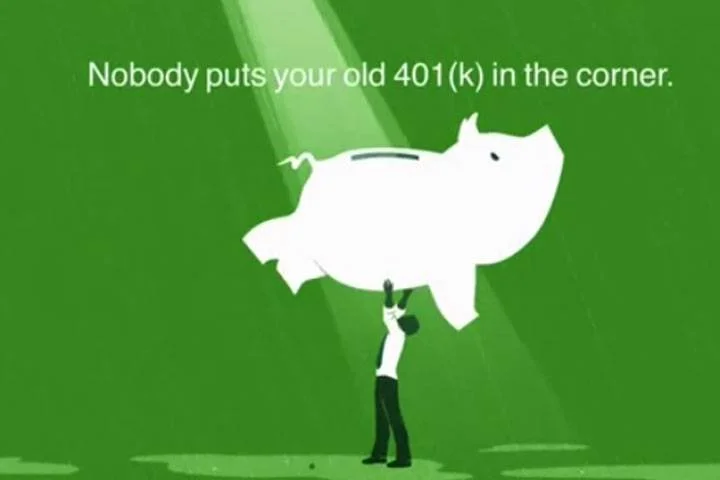
Above: A screenshot from the TD Ameritrade commercial that led to legal action.
The Agency's Responsibility is Real
Here's what I want advertising agencies to understand clearly: the responsibility for clearances sits with you.
When a Rights Holder comes knocking, they go to the brand - the advertiser whose product is being promoted. Not the agency that made the creative. But as I saw earlier, make no mistake, the relationship damage flows straight back up the chain. If your creative work exposes a client to legal action, a cease and desist, a forced withdrawal of campaign materials, or a costly settlement, that client is not going to forget it. And they are probably not going to stay your client.
Think about the standards the industry already applies without question:
You would never use an image of Taylor Swift in an ad without her team's approval. Not because you're a particularly cautious agency, but because you know, with absolute certainty, that the legal response would be ‘swift’, expensive, and public.
You would never put a song in a campaign without a license. Music clearances are routine. Sync licenses, master rights, performance rights - agencies understand this process intuitively. The paperwork is normal. The fees are budgeted for.
So why does third-party IP - a character, a franchise element, a visual reference - sometimes get treated as fair game? The underlying principle is identical. Someone created it. Someone owns it. Using it without permission is not a creative choice; it's a legal risk.
A Word on Principle
There's a broader argument here that I think the creative industry needs to sit with.
Advertising agencies, and the creative sector more broadly, are understandably vocal when their work is appropriated without credit or compensation. When a campaign gets ripped off, or a concept is lifted by a competitor, the industry rallies. And rightly so. Creative work has value. Creators deserve to be paid.
But that principle applies universally - not just when it's your IP being copied.
Entertainment companies, studios, and IP owners invest enormous resources in building the characters, worlds, and franchises that have become part of our cultural fabric. When an advertiser reaches into that world without a license, they are extracting commercial value from someone else's investment without paying for it. That's exactly the thing the creative industry says it hates most.
The advertising industry cannot credibly hold one position for itself and a different one for everyone else. If you believe in respecting creative work, you need to respect it across the board - and that means securing the right licenses, paying the right fees, and ensuring the people who built those IP assets are properly compensated.
What to Do Instead
The good news is that licensing entertainment IP for advertising use is entirely possible - and often a powerful creative strategy when done properly. A legitimate brand partnership with a film franchise, a character license, or a music sync deal can achieve everything the "inspired by" shortcut was trying to do, and it comes with the Rights Holder's full support rather than their legal team's attention.
If you're working on a campaign where the creative is leaning into a cultural reference, ask yourself:
Are we expecting consumers to recognise this reference? If yes, do we have a license?
Could this be read as implying an affiliation with the Rights Holder?
Have we sought proper legal clearance for every element - visual, typographic, character, music?
Who bears responsibility if this goes wrong, and have we documented that clearly?
These aren't questions that slow a campaign down. They're questions that protect it.
Final thoughts
Advertising that licenses entertainment IP and characters can be enormously successful - some of the most talked-about campaigns in recent memory have been built around beloved franchises, iconic characters, and cultural touchstones. But that success is only possible when the right permissions are in place. If you're working on a campaign that's reaching for a cultural reference, a character, or a visual world that isn't yours - get the conversation started early. A licensing discussion at the brief stage costs a fraction of what comes after. And if you're not sure where the line is, that's exactly what Born Legal is here for.